


Contrary to the image Donald Trump has tried to project of American power and influence in the world, recent days have been marked, for him, by a series of setbacks—setbacks that this time appear not in a single file, but simultaneously across several important arenas of US foreign policy. Reuters, in a report, addressed this very issue, citing Trump's speech at the United Nations, his meeting with China's president, the war against Iran, and the unsuccessful efforts to end the war in Ukraine as signs of the limits of his ability to advance Washington's demands.
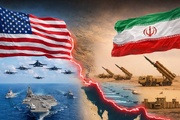
In his speech at the UN General Assembly, Trump tried once again to present an image of American power. While defending his administration's conduct in the war with Iran, he threatened Tehran that if an agreement was not reached, it might face harsher military measures. Trump even spoke of the possibility of Iran's annihilation and emphasized that Washington remains ready to use its military power to achieve its objectives.
But raising the level of threats does not necessarily mean an increase in America's ability to achieve its political goals. The war with Iran—which Trump has from the outset tried to frame within the context of American military power—continues, and has become one of the most complicated files of his administration's foreign policy. Iran's resistance to American military and economic pressures has meant that Washington has been unable to convert these pressures into a clear and lasting political outcome.
Developments in recent days also show that the path to an agreement remains difficult. On the sidelines of the UN General Assembly, Iran put forward proposals to end the conflicts and reopen the Strait of Hormuz, but Trump did not accept these proposals. Under these circumstances, the continuation of the conflict shows that American pressures have still not been able to force Tehran to accept Washington's core demands.
On the other hand, many of America's European and Asian allies have not gone along with Washington's requests for greater participation in confronting Iran. This matters from another angle as well; because American power does not depend solely on this country's military strength—the ability to build coalitions and bring allies along is also an important part of Washington's global power.
The China file shows a similar picture. In his meeting with Chinese President Xi Jinping, Trump tried to use the summit as a sign of his ability to manage one of the world's most important geopolitical rivalries. However, according to Reuters, the tangible result of this meeting remained largely confined to maintaining the trade truce and preventing an escalation of economic tensions between the two countries.
While important files such as Taiwan, trade, artificial intelligence, and China's role in international developments remain points of disagreement between Washington and Beijing, no concrete achievement was reached that could be said to resolve these disputes. This shows that even when Trump enters direct negotiations with China's leader, the gap between a display of power and the achievement of a real agreement remains considerable.
Of course, this does not mean America is empty-handed against China, or that Trump lacks tools of pressure. Washington still possesses considerable economic, technological, military, and diplomatic leverage. But the main issue is the extent to which these tools can be converted into a political outcome. Indeed, the ability to exert pressure is different from the ability to impose a final result.
On the Ukraine file as well, Trump faces a similar challenge. He had repeatedly promised that he could end the war between Russia and Ukraine, and in recent months has made efforts to bring Moscow and Kyiv closer to an agreement. However, Washington's efforts to reach a ceasefire—including in the energy sector—have so far not led to a stable and significant outcome.
The continuation of the fighting between Russia and Ukraine shows that American influence, even in a file where Washington plays an important role, is not sufficient to impose a final solution. Russia and Ukraine both have their own particular interests and calculations, and Trump cannot simply force them to accept a demand merely by announcing it.
These three files reveal an important point about the Trump administration's foreign policy. America remains one of the most powerful actors in the world, and its president has extensive economic, military, and diplomatic tools at his disposal; but there is a gap between the "ability to create pressure" and the "ability to convert pressure into a political outcome."
In the Iran file, the war continues; regarding China, fundamental disagreements remain unresolved; and in Ukraine, Trump's efforts to end the war have not yet led to a final agreement. For this reason, this set of developments can be seen as a sign of the difficulty of converting American power into political outcomes.
Trump can still threaten, exert pressure, and make decisions that affect global equations; but developments in recent weeks show that in international politics, a display of power is not the same as achieving the desired result. The important question now facing the American president is to what extent Washington can convert its power into results—not just in a single file, but simultaneously across several major global crises.
MNA













Your Comment